


Shiny Chemical Lace Fabric has been gaining significant popularity in the textile industry due to its exquisite appearance and versatile applications. As a supplier of this high - quality fabric, one of the most frequently asked questions I encounter is about its tear resistance. In this blog post, I will delve into the concept of tear resistance of Shiny Chemical Lace Fabric, exploring the factors that affect it,testing methods, and why it matters in real - world applications.
Understanding Tear Resistance
Tear resistance refers to a fabric's ability to withstand the forces that try to tear it apart. It is different from tensile strength, which measures the fabric's ability to resist stretching. When a fabric is being torn, a small force is concentrated at a specific weak point, such as a hole or a seam, and the fabric's structure must be able to distribute this force to prevent further damage.
For Shiny Chemical Lace Fabric, tear resistance is a crucial property as it is often used in applications where it may be subjected to mechanical stress. For example, in the fashion industry, it can be used as a Chemical Lace Overlay on dresses or tops. During normal wear and movement, the fabric may rub against other surfaces or be pulled accidentally. A high tear - resistant fabric ensures that the garment remains intact and visually appealing for a longer time.
Factors Affecting Tear Resistance of Shiny Chemical Lace Fabric
Fiber Type
The type of fibers used in the Shiny Chemical Lace Fabric plays a fundamental role in determining its tear resistance. Most Shiny Chemical Lace Fabrics are made from synthetic fibers, such as polyester. Polyester fibers are known for their high strength and durability. They have a regular molecular structure that allows them to resist the forces that cause tearing. Compared to natural fibers like cotton, polyester can withstand more stress before tearing.
For instance, Milky Yarn Chemical Lace is typically made with polyester - based milky yarns. These yarns contribute to the fabric's overall tear resistance, making it suitable for various applications where durability is required.
Fabric Structure
The way the fabric is constructed also has a significant impact on its tear resistance. The lace pattern in Shiny Chemical Lace Fabric can vary widely, from simple geometric shapes to intricate floral designs. A well - structured lace pattern with a dense network of yarns can distribute the tearing force more effectively.
In Chain Chemical Lace, the chain - like structure provides a certain level of reinforcement. The interlocking chains help to transfer the stress from the point of tear to other parts of the fabric, reducing the likelihood of a complete tear.
Chemical Treatments
Chemical treatments can be applied to Shiny Chemical Lace Fabric to enhance its tear resistance. These treatments can modify the surface properties of the fibers, making them more resistant to abrasion and tearing. For example, some treatments can increase the friction between the fibers, which helps to prevent the fibers from slipping past each other when a tearing force is applied.
However, it is important to note that excessive chemical treatments may also affect the fabric's other properties, such as its softness and breathability. Therefore, a balance must be struck between enhancing tear resistance and maintaining the fabric's overall quality.
Testing Tear Resistance
There are several standard methods for testing the tear resistance of fabrics, and these can also be applied to Shiny Chemical Lace Fabric.
Elmendorf Tear Test
The Elmendorf Tear Test is one of the most commonly used methods. In this test, a specimen of the fabric is clamped in a tester, and a pendulum is used to tear the fabric. The energy required to tear the fabric is measured, and this value is used to determine the fabric's tear resistance. A higher energy value indicates better tear resistance.
Tongue Tear Test
The Tongue Tear Test involves creating a slit in the fabric and then pulling the two sides of the slit apart. The force required to propagate the tear is measured. This test is useful for evaluating the fabric's tear resistance in a direction parallel to the yarns.
Why Tear Resistance Matters in Applications
Fashion and Apparel
In the fashion industry, Shiny Chemical Lace Fabric is used in a wide range of garments, from bridal gowns to evening wear. A fabric with good tear resistance ensures that the garment can withstand the rigors of daily wear, such as sitting, walking, and dancing. It also reduces the risk of the fabric getting damaged during fitting or alterations.
Home Decor
Shiny Chemical Lace Fabric can also be used in home decor items, such as curtains, tablecloths, and pillow covers. In these applications, the fabric may be exposed to different types of stress, such as pulling when opening or closing curtains. A high tear - resistant fabric will last longer and maintain its aesthetic appeal.
Industrial Uses
In some industrial applications, Shiny Chemical Lace Fabric may be used as a filtration or protective material. Tear resistance is crucial in these cases to ensure the fabric can perform its intended function without getting damaged easily.
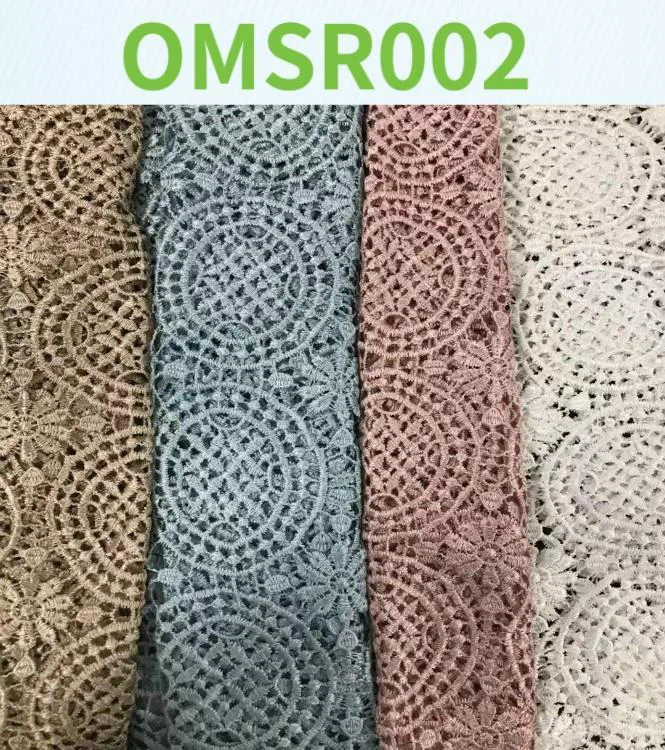

Choosing the Right Shiny Chemical Lace Fabric for Tear Resistance
When selecting Shiny Chemical Lace Fabric based on tear resistance, it is important to consider the specific application. For applications where the fabric will be subjected to high levels of stress, such as in some industrial uses, a fabric with a higher tear resistance rating should be chosen.
Customers can also look at the fabric's technical specifications provided by the supplier. These specifications usually include information about tear resistance, along with other important properties such as tensile strength, colorfastness, and shrinkage.
Contact for Purchase and Negotiation
If you are interested in purchasing Shiny Chemical Lace Fabric, I encourage you to contact us for a detailed discussion. We have a wide range of products with different tear resistance levels to meet your specific needs. Whether you are a fashion designer, a home decorator, or involved in an industrial project, we can provide you with the right fabric. Do not hesitate to reach out, and let's work together to find the perfect Shiny Chemical Lace Fabric for your applications.
References
- Textile Institute. (2019). Handbook of Textile Testing and Quality Control. Woodhead Publishing.
- ASTM International. (2020). Standard Test Methods for Tear Resistance of Textile Fabrics. ASTM Publications.


