If you’ve ever stretched a piece of embroidery fabric while crafting a custom garment, trimming an eyelet design, or prepping fabric for a large embroidery project, you’ve probably wondered: why does some embroidery fabric give way a little, while another type feels rigid enough to hold a heavy sequin design without shifting? As an embroidery fabric supplier, I get this question all the time—from small boutique seamstresses launching their first line of embroidered blouses to large apparel factories sourcing bulk fabric for seasonal collections. Stretchability isn’t just a “nice-to-have” detail for embroidery fabric; it’s a functional, project-defining quality that can make or break the final look and durability of your work. Let’s break down what stretchability actually means for embroidery fabric, what factors determine it, how different fabric types stack up, and how to pick the right one for your next project.
First, let’s get clear on what stretchability is, specifically for embroidery fabrics. Unlike stretch fabrics like spandex or Lycra that expand dramatically with minimal force, embroidery fabric stretch is usually modest, falling between 5% and 25% elongation along one or two axes (the warp, lengthwise, or weft, crosswise, threads of the fabric). This stretch isn’t about fitting a swimsuit or activewear; it’s about how well the fabric moves with the body when sewn into garments, how it behaves under the tension of an embroidery hoop, and how it resists warping after multiple washes. For embroidery specifically, stretchability is extra critical because excess tension in the hoop or heavy decorative threads (like metallic or sequin thread) can pull the fabric out of shape if it’s too rigid, or cause puckering if it’s too stretchy and shifts while stitching.
The biggest factor that determines stretchability in embroidery fabric is its base fiber and construction—two elements that work together to create a fabric’s overall flexibility. Let’s start with fiber content, because not all fibers stretch the same way. Natural fibers like cotton, linen, or silk have a relatively low inherent stretch: cotton, for example, only stretches about 3-5% lengthwise, because its fiber structure is a tight, crystalline chain that doesn’t bend easily. That’s why pure cotton embroidery fabric feels stable under a needle, but it’s prone to shrinking if not pre-washed, which can throw off any embroidery. On the other hand, synthetic fibers like polyester, nylon, and even a small blend of spandex add noticeable stretch to embroidery fabric. Polyester, used in many 3D lace and sequin fabrics, has a slightly more flexible molecular structure than cotton, with stretch ranging from 10-15% for woven synthetics to up to 20% for knit synthetics. That extra stretch is perfect for garments like dresses that need to move with the wearer, but you have to account for it when setting your embroidery tension to avoid stitch distortion.
The second huge factor is the fabric’s weave or construction—this is where different embroidery fabric types start to diverge in stretch, and where I’ve seen buyers get the most confused when selecting materials. Let’s go through some common embroidery fabric types I supply, and their stretch levels, to make this concrete.
First, Cotton Schiffli Fabric: this is one of the most popular embroidery fabrics for delicate, lightweight pieces like blouses, lingerie, and bridal trim. Schiffli fabric is made by embroidering a decorative design directly onto a base cotton fabric using a schiffli embroidery machine, which sews detailed motifs that often leave open, eyelet-style cutouts. Pure cotton Schiffli fabric has very low stretch, usually around 4-6% along the crossgrain, and almost no stretch lengthwise. That rigidity is intentional: it helps the intricate eyelet designs hold their shape, so a lace trim for a wedding dress doesn’t warp when sewn or washed. I always recommend cotton Schiffli fabric for projects where precision is key, like custom embroidery monograms or detailed floral designs that can’t afford shifting. If you’re looking for this type, you can find it at our Cotton Schiffli Fabric page, tailored for both small craft projects and bulk apparel orders.
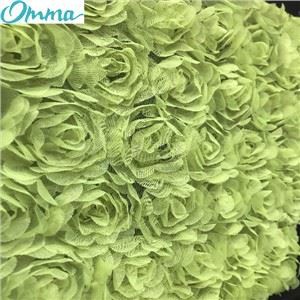
Next, when we move to fabrics with a bit more give, we get to options like 3D Rose Lace Fabric, which is typically made from a blend of polyester and nylon, sometimes with a tiny amount of spandex for extra flexibility. 3D lace is designed to have a voluminous, raised floral look, often used for prom dresses, costume details, and statement pieces. Its stretch is a bit higher than pure cotton Schiffli, usually ranging from 8-12% crosswise, with mild stretch lengthwise. That stretch helps the lace hug the body without feeling restrictive, which is why it’s so popular for formal wear. But because it’s more stretchy, you have to adjust your embroidery hoop tension: pull the fabric just enough to keep it taut, not so tight that you stretch the lace’s delicate 3D motifs out of shape. Our 3D Rose Lace Fabric is formulated to have consistent, controlled stretch, so you get that voluminous look without the risk of stitch distortion.
For projects with even more textural and decorative weight, Flower Sequin Embroidery Fabric is a go-to for many. This fabric has sequins sewn directly onto the base, arranged in floral patterns, and is used for party wear, dance costumes, and statement tops. The base of this fabric is often a stretch knit mesh blended with polyester, so its overall stretch is higher—usually 12-18% crosswise, with 5-8% lengthwise. That stretch is crucial here because sequin fabric needs to move with the body, especially for dance or active wear, and the heavy sequins add tension that a more rigid fabric couldn’t handle without pulling or tearing. The trade-off? Because it’s stretchier, you have to use a specialty needle (like a ballpoint or sequin needle) when embroidering to avoid snagging sequins, and make sure your embroidery thread is strong enough to hold the tension of the stretch. You can explore our Flower Sequin Embroidery Fabric collection for options ranging from lightweight sheer sequins to heavier, more durable bases for bulk orders.
If you’re working on a project that needs a balance of stability and a little give, White Embroidered Cotton Fabric is a great middle ground. Unlike pure Schiffli fabric, this type often has a cotton base blended with 2-5% spandex, adding just enough stretch (6-8%) to feel comfortable when sewn into shirts, dresses, or home decor like pillow covers. The embroidery is still detailed, but the mild stretch means it won’t pucker or warp when worn, even after multiple washes. This type is super versatile for everyday projects, from custom embroidered t-shirts to table linens for events. Our White embroidered cotton fabric range includes solid white options perfect for custom dyeing, as well as pre-embroidered borders for quick, professional-looking projects.
Finally, Bond Mesh Embroidery Fabric is a specialty option for open, airy designs, like festival wear, back panels for dresses, or decorative wall hangings. Mesh fabric is naturally more flexible than woven cotton, so Bond Mesh has a stretch range of 10-15% crosswise, with lengthwise stretch around 7-10%. The “bond” part of the name refers to the way the mesh is heat-sealed, rather than stitched, at the edges, which prevents fraying while still keeping its flexible, lightweight feel. This stretch makes it easy to shape the mesh into curved garments or accessories, and embroidery works beautifully because the open weave lets the design pop without feeling heavy. Our Bond Mesh Embroidery Fabric is available in a range of mesh weights, from sheer for delicate designs to heavier mesh for more structured pieces, so you can match it to your project needs.
Now that we’ve covered stretch levels across common embroidery fabrics, let’s talk about why stretchability matters beyond just how it feels when you sew it. For embroidery specifically, stretchability directly impacts stitch quality. If you use a fabric with too much stretch for a design with very tight, dense stitching (like a monogram or a thick decorative border), the fabric will stretch under the needle’s pressure, then relax after you take it out of the hoop, leaving puckered or uneven stitches. On the flip side, if you use a rigid fabric for a garment that needs to move, the fabric will pull away from the body, causing seams to gap or the embroidery to pull and crack. I’ve seen this happen so many times: a customer buys a beautiful sequin fabric that’s perfect for a dress, but uses a rigid cotton base fabric to line it, leading to stitching that pulls and tears when the wearer sits or moves. The key is matching the fabric’s stretch to both your embroidery design and the final use of the garment.
Another common question I get: how do you test the stretch of embroidery fabric before you cut into it? As a supplier, I always test every batch of fabric before it ships to make sure it meets consistent stretch standards, but for customers testing at home, there’s a simple way to do it. Cut a 10x10 inch swatch of the fabric, mark a straight line across the crossgrain and warp, pull the fabric gently along both axes, and measure how much the line stretches. If it stretches less than 5% along both axes, it’s low-stretch, good for detailed embroidery or rigid garments. Between 5-15% is medium-stretch, versatile for most apparel. Over 15% is high-stretch, best for stretchy garments or lightweight, open embroidery designs.
It’s also important to note that stretchability can change after you wash or finish the fabric. Most cotton embroidery fabrics will shrink slightly (about 2-3%) when washed in hot water, which reduces their stretch even more, so pre-washing is always a good step if you plan to embroider after sewing. Synthetic fabrics like polyester and nylon might stretch a little with wear (called “relaxation stretch”) if they’re pulled too tight in the hoop during embroidery, so it’s best to pre-stretch synthetic fabrics by pulling them gently in both directions before hooping, to prevent that post-wash shifting.
Whether you’re a small craft enthusiast making a custom embroidered tote, a boutique owner launching a line of lace dresses, or a large factory sourcing bulk fabric for a seasonal collection, understanding embroidery fabric stretchability is key to getting a professional, long-lasting result. The right stretch level doesn’t just make sewing easier—it ensures your embroidery stays smooth, your garment fits well, and your final piece looks exactly as you envisioned.
As an embroidery fabric supplier, we work with customers of all sizes to find the right fabric for their projects, with consistent quality and transparent stretch details for every product. Whether you need rigid cotton Schiffli for delicate bridal trim, flexible 3D lace for prom wear, or sequin fabric for party designs, we have a range of options tailored to different stretch needs. If you’re ready to source fabric for your next project, our team can help you select the right material, answer any questions about stretch or other fabric properties, and provide samples to test before you place a bulk order. We’re here to help you turn your embroidery ideas into high-quality, wearable pieces.
REFERENCES


- Textile Institute. (2020). “Physical Properties of Woven Fabrics: Stretch and Recovery.” The Textile Journal, 91(3), 45-52.
- Collier, B., & Tortora, P. G. (2018). “Understanding Textiles” (8th ed.). Fairchild Books.
- Schiffli Embroidery Manufacturers Association. (2021). “Properties of Schiffli Fabrics for Apparel and Home Decor.” Annual Technical Report.
- Textile Research Journal. (2019). “Stretch Behavior of Polyester Lace Fabrics for Formal Wear.” 89(12), 2345-2357.
- American Association of Textile Chemists and Colorists. (2020). “Standard Test Method for Elongation of Woven Fabrics (ASTM D5034).” AATCC Technical Manual.