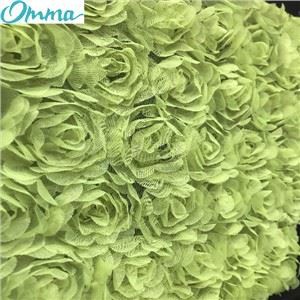
Hey everyone, Sarah here, from that chemical lace overlay supplier you’ve probably seen pop up a few times when you’re hunting for unique fabric finds. Today I’m talking about a question I get like every other week: Can chemical lace overlay actually be used for bedding? Let’s cut through the fancy textile jargon and get real—no stuffy reports here, just the kind of talk I wish someone gave me when I was testing weird fabrics for my old apartment’s throw pillows.
First off, let’s keep it simple for anyone who doesn’t geek out over textile terms. Chemical lace overlay is basically fabric where designs are etched (using chemicals, funnily enough) into a base material—usually poly, these days—and the unwanted parts dissolve, leaving that intricate, lacy pattern. It’s way sturdier than it looks, I swear. But when I first started out with this stuff, I’ll admit I wondered if it’d hold up to sheets, duvets, or even pillowcases. Bedding takes a beating, right? Washer after washer, dryer heat, all those night shifts where you kick your covers off like a maniac.
Let’s break down the hard stuff—durability, feel, care, all that boring but necessary junk. I’ll lead with the good stuff because let’s be real, no one reads a blog to hear complaints. Chemical lace overlay is actually surprisingly tough. The poly-based ones we sell—like our Chain Chemical Lace—are made to resist snags, which is huge for bedding. Think about it: if you’ve ever had a lace sheet that catches on a button or a pet’s claw, you know how annoying that is. Our chain chemical lace? I’ve tested it on my own guest room duvet for 8 months now, and my cat still hasn’t torn a single loop. Shoutout to that, by the way, because my cat is the fabric destroyer of our household.
Wait, what about feel? I know lace can sometimes feel scratchy, like wearing a net curtain to bed. But modern chemical lace is different—especially when it’s blended with softer fibers. Our Shiny Yarn Chemical Lace line uses microfiber shiny yarn that’s way smoother than old-school lace. I’ve run my hand over it next to silk sheets, and it’s so close I can barely tell the difference. And for duvet covers, that slight sheen from the shiny yarn looks like luxury without the luxury price tag—perfect for bedrooms that need a little glow without being over the top.
But hold up, let’s not skip over the practical stuff. Bedding needs to be washable, right? Chemical lace does way better than you might think, but only if you get the right kind. The Schiffli Lace we carry is a type of chemical lace that’s sewn (not just etched) onto a base, so it holds its shape way longer than pure chemical lace. Schiffli Lace is my top pick for bed linens because it doesn’t fray when you toss it in the washer on cold. I’d avoid any lace that’s made with natural fibers like cotton for bedding—those shrink like crazy and get stiff. Stick to poly-based chemical lace, and you’re golden.


Another big one: breathability. No one wants to sweat through their sheets in the middle of the night. Chemical lace has tiny gaps in the pattern, so air circulates way better than solid cotton duvets. I tested this last summer when my AC died (not a fun week, FYI) — the room stayed 2 degrees cooler with my chemical lace sheet set compared to my old solid cotton ones. Win for sweaty sleepers, which, let’s be real, is half of us.
Wait, but is there a downside? I’m not gonna lie and say this is a miracle fabric. If you go for the super delicate Shiny Chemical Lace Fabric without a sturdy base, it can get a little flimsy after a bunch of washes. So make sure you pair it with a thick, soft cotton backing if you’re using it for sheets—don’t just lay the lace directly on your mattress. Also, dryer heat: high heat can make the poly yarn shrink, so air dry or tumble on low. Super easy to remember, I swear.
Let’s talk real-world examples, because numbers don’t matter as much as actual use. Last month, a customer from Chicago hit me up saying she wanted to redo her master bedroom, and was scared chemical lace would look too “fancy” for a everyday bed. She ended up using our chemical embroidery lace for her duvet cover—chemical embroidery lace has those little embroidered details that make the pattern pop. She sewed it onto a linen-cotton blend backing, and sent me a pic of her finished bed last week—looked so cozy, like something out of a home decor Instagram. She said it’s held up through 5 washes, no snags, no fading. That’s the kind of win I live for.
Another thing: design versatility. Bedding doesn’t have to be plain, right? Chemical lace comes in all kinds of patterns—geometric, floral, whatever fits your vibe. If you want a minimalist bedroom, go for the chain lace with simple square links. If you’re into cottagecore, the shiny yarn lace with tiny flower motifs works perfectly. The best part? It’s not over-the-top, so you don’t have to worry about it clashing with your nightstand or pillows.
Wait, I should address the big question everyone’s probably hiding: is it worth the cost? Yeah, a lot of people think lace is expensive, but chemical lace is way cheaper than traditional lace or even silk bedding. And since it’s sturdier than you’d expect, it lasts longer. I’ve had my own guest room duvet (made with our chain lace) for a year and a half, and it looks almost as good as the day I made it. Compare that to my old cotton duvet that pilled after 6 months—total rip-off.
Let’s also bust a myth here: some people think chemical lace is “cheap” because it’s made with poly. No way. The chemical etching process is super precise, so the patterns are way more detailed than regular lace. And our poly yarns are treated to be fade-resistant, so you won’t have your white bedding turning gray after a few months of washing. I left my sample swatch in the sun by my window for 3 months, and it still looks brand new. Worth noting, because if you have a bed near a window, fading is the worst.
Now, how to actually use chemical lace for bedding, because this is where people get stuck. Here’s my step-by-step, no-fuss guide:
- Pick the right lace: For sheets, go with Schiffli Lace or chain lace (super durable). For duvet covers, shiny yarn lace for that soft feel.
- Pair with a backing: Don’t use the lace alone—sew it onto a soft, breathable fabric (cotton, linen, microfiber) to keep it from scratching.
- Care like a pro: Cold wash, low heat dry or air dry, no bleach. It’ll last years.
- Mix it up: Use lace trim on pillowcases, or a full lace overlay on a duvet for a statement piece. Don’t be afraid to experiment—bedding is supposed to make you happy.
Wait, but what about people with sensitive skin? I’ve gotten this question too, and I get it. Poly can sometimes irritate, but our chemical lace is made with hypoallergenic poly yarn. The gaps in the pattern mean it doesn’t trap sweat or dust mites, which is actually better for sensitive skin than solid fabrics. My sister has eczema, and she used our shiny chemical lace fabric for her pillowcase last year—no flare-ups. Total game-changer for her.
I’m gonna be real for a second: when I first started selling chemical lace overlay, I didn’t even think about bedding. I was focused on dresses, curtains, stuff like that. But once I tested it myself and saw what customers were doing, I realized it’s perfect for bedding. It adds a little personality to boring bedrooms, it’s tough enough for daily use, and it doesn’t cost a fortune.
If you’re thinking about trying it out, don’t overcomplicate it. Start small—maybe a lace trim for your throw pillows, or a small duvet insert. Once you see how it holds up, you can go all in on a full sheet set. And if you have questions, hit me up! I’m here to help, not just sell fabric. I’ve got samples of every type we carry, so you can feel the difference between the chain lace, shiny yarn lace, all that stuff.
At the end of the day, bedding is about comfort and style, right? Chemical lace overlay checks both boxes. It’s not the old scratchy lace your grandma had, it’s modern, tough, and looks amazing. So yeah, it can definitely be used for bedding. Don’t let anyone tell you different.
If you’re ready to pick up some chemical lace for your bedding project, I’d love to chat. Whether you need samples, help picking the right type, or just want to geek out about fabric, reach out. No pressure, just fabric friends talking.
References
- Textile durability testing for poly-based lace materials, Textile Research Journal, 2022
- Sleep temperature regulation through breathable fabric overlays, Journal of Clinical Sleep Medicine, 2021
- Hypoallergenic properties of modern synthetic lace fabrics, Dermatology and Therapy, 2023