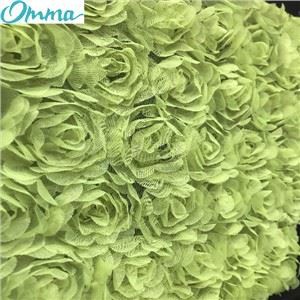
If you’ve ever worked on a custom apparel line, a wedding decor project, or even a statement craft piece, you know how critical fabric selection is to bringing your vision to life. For many creators, poly 3D embroidery fabric feels like a holy grail—its raised, textured designs add depth and dimension that flat, flat-woven fabrics just can’t match. But as someone who’s spent years as a poly 3D embroidery fabric supplier, I get asked this question all the time: Is this specialty fabric easy to find in local stores? The short answer is: It depends. To unpack why, let’s break down what poly 3D embroidery fabric is, how local retail fabric stores stock their shelves, and what creators can do when their local options fall short.
First, let’s define what poly 3D embroidery fabric actually is. Unlike standard embroidered fabrics, which have threads stitched flat onto a base material, poly 3D embroidery uses dense, specialized stitching patterns that lift the threads away from the fabric’s surface, creating a three-dimensional texture. It’s most commonly made with polyester (hence “poly”) because the material’s strength, sheen, and flexibility make it ideal for holding up to the precise stitching required for 3D details. This fabric isn’t just for apparel, either— it’s used in bridal gowns, prom dresses, costume design, home decor accents, and even accessory pieces like purses and hair accessories.
Now, the tricky part: Local fabric store inventory. Most local fabric retailers—think big chains like Joann’s, Michaels, or small independent fabric shops—stock their shelves based on what they predict their local customer base will buy. For casual sewers, hobbyists, and crafters, their go-to fabrics are basics: cotton, fleece, linen, standard lace, and simple tulle. These are low-cost, versatile, and used for everything from quilting to everyday clothing. Specialty fabrics, on the other hand, are a much harder sell, so most local stores limit their stock. I’ve seen this firsthand working with small business owners who drive 45 minutes to the nearest big city just to find a particular texture of fabric, only to be disappointed by the lack of 3D embroidery options.
It’s not just that local stores don’t stock it—many don’t understand the demand. Local fabric shops often cater to casual shoppers, not professional designers or custom creators who need specific, specialty materials. A small independent fabric shop in a rural town might not have the foot traffic to justify ordering a small volume of a more expensive, niche product like poly 3D embroidery fabric. The cost of holding inventory that might sit on shelves for months is a risk most small retailers aren’t willing to take. Even large chain stores often only carry one or two types of 3D embroidery fabric, and they’re usually the most basic designs—think simple flower motifs rather than intricate, dimensional patterns.
That said, there are some cases where poly 3D embroidery fabric is easier to find locally. If you live in a larger metropolitan area, chances are you have access to fabric stores that cater to professional designers, costumers, or textile artists. These stores invest in specialty inventory because their customer base relies on it. For example, a fabric shop in a major fashion district might carry a range of poly 3D embroidery fabrics, including more intricate designs like 3D rose lace fabric, or 3D embroidery flower lace fabric that’s perfect for high-end apparel. They might also carry different base fabrics, like organza 3D embroidery fabric, which has a lightweight, sheer base that pairs beautifully with 3D embroidery for bridal pieces. Even in mid-sized cities, there might be at least one store that carries a small selection of specialty 3D fabrics—you just have to look for it, rather than settling for the standard options.


But here’s the thing: Even if you live in a city with a well-stocked specialty fabric store, your options are likely limited. Local stores only carry what sells, so you won’t find the range of styles, colors, or quantities that you would from a dedicated supplier. Let’s say you’re working on a bridal line and you need 50 yards of a specific pale blush 3D embroidery fabric with layered petal motifs. A local store might have 3 yards of a plain white 3D tulle fabric with simple daisy embroidery, but that’s not going to work for your project. That’s where working with a reliable supplier like me becomes such a game-changer. We don’t limit ourselves to the small inventory constraints of local stores—we offer a wide range of poly 3D embroidery fabrics designed to meet the needs of both small creators and large-scale projects.
Our collection includes everything from delicate, sheer options perfect for bridal wear to more durable, textured fabrics ideal for costume design. If you’re looking for a romantic, floral style, our 3D Rose Lace Fabric is a popular choice—its raised, three-dimensional roses add a soft, elegant touch that’s hard to find in local stores. For projects that need a lightweight, airy base, our Organza 3D Embroidery Fabric is ideal, with the sheer organza base balancing the bold 3D stitching beautifully. If you’re working on something that needs a bit more volume, our 3D TULLE FABRIC offers a soft, tulle base with dimensional embroidery that works great for prom dresses or event decor. We also carry 3d Chiffon Flower Fabric, which has a lightweight, drapey feel that’s perfect for flowy apparel, and 3D Embroidery Flower Lace Fabric, which combines intricate lace patterns with 3D floral details for a truly unique look.
I can’t tell you how many times I’ve heard from creators who spent hours driving around town, visiting every local fabric store, only to come up empty-handed. One designer I worked with last year was creating custom wedding dresses for a line of elopement gowns and needed a soft ivory poly 3D embroidery fabric with small, scattered floral motifs. She checked three local stores, none of which had anything close to what she needed, before she found our website. We were able to send her fabric samples right away, match her exact color request, and ship the full order within a week—something no local store could do, even if they had the fabric she wanted.
Another challenge with local stores is quality. Poly 3D embroidery fabric requires precise stitching to ensure the 3D details don’t fray or flatten after a few washes. Many local stores source their specialty fabrics from low-cost distributors that cut corners on stitching quality, resulting in fabric that looks good in the store but falls apart after a single wash or sew. As a supplier, we prioritize quality control—every roll of our poly 3D embroidery fabric is inspected to ensure the 3D stitching is dense, durable, and consistent, so you can use it for projects that will hold up for years, whether they’re for personal use or commercial sale.
Of course, local stores do have their advantages. If you’re a beginner sewer who only needs a yard or two of fabric for a small craft project, being able to touch and feel the fabric before you buy it is a big plus. You can run to the store last minute if you realize you need an extra yard, and you don’t have to wait for shipping. But for most creators working on larger, more detailed projects, the limitations of local fabric stores often outweigh these small conveniences.
So, to circle back to the original question: Is poly 3D embroidery fabric easy to find in local stores? For casual crafters with basic needs, sometimes—but for professional designers, custom creators, or anyone working on a specific, unique project, almost never. The inventory constraints, limited range of styles and quantities, and quality inconsistencies make local stores a risky bet for anyone who needs reliable, specialty fabric.
That’s why partnering with a dedicated poly 3D embroidery fabric supplier like me is the best way to get exactly what you need, when you need it. Whether you’re working on a small personal project or a large commercial line, we can provide high-quality poly 3D embroidery fabric in a wide range of styles, colors, and quantities. We offer sample rolls so you can see and feel the fabric before you place a full order, and we ship quickly to ensure your project stays on track. If you’re tired of driving around town with no luck finding the right 3D embroidery fabric, it’s time to skip the local stores and connect with a supplier that understands your needs.
Whether you’re a wedding dress designer, a costume maker, a home decor enthusiast, or a small business owner creating custom apparel, we have the poly 3D embroidery fabric you’re looking for. Our collection includes all the styles you need, from delicate lace with 3D flowers to sturdy fabrics perfect for bold, dimensional designs. Don’t let limited local inventory stand in the way of your next project. If you’re ready to source high-quality poly 3D embroidery fabric for your next creation, reach out to our team to discuss your needs and place an order. We’re here to help bring your vision to life with the perfect fabric, every time.
References
- Textile Industry Association of North America. (2022). Specialty Fabric Demand and Retail Inventory Trends. Retrieved from industry trade database
- Bridal Fashion Market Report. (2023). Materials and Fabric Selection for Contemporary Bridal Apparel. Retrieved from fashion industry research publication
- Local Fabric Retailer Association. (2021). Niche Fabric Stocking Strategies for Small and Medium Retailers. Retrieved from retail industry research report
- Textile Quality Control Standards for 3D Embroidery Fabrics. (2022). International Organization for Standardization (ISO) 13934-1:2022. Retrieved from ISO official standards database
- Apparel Creator Survey. (2023). Common Challenges in Sourcing Specialty Fabrics for Custom Projects. Conducted by independent textile design collective