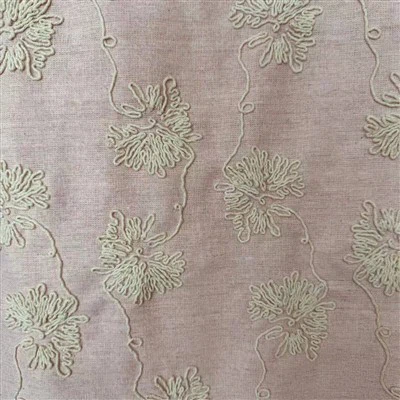
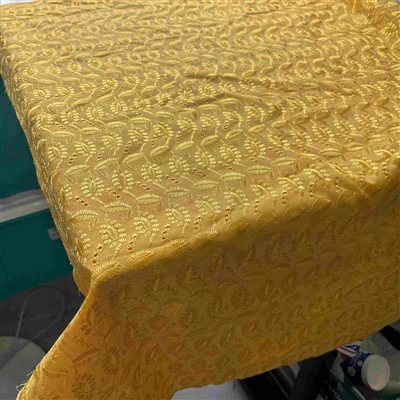
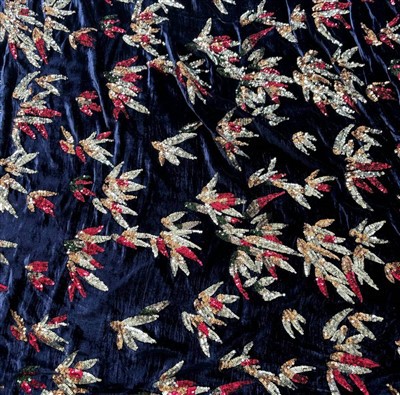
Weaving Embroidery fabrics can use a wide range of raw materials, including cotton, wool, silk, linen, chemical fiber and their blended or interwoven yarns. Knitted material is soft, in addition to having good wrinkle resistance and breathability, it also has greater stretch and elasticity, which is suitable for underwear, tights and sportswear. After changing the structure and improving the dimensional stability of Embroidery fabrics, Embroidery fabrics can also be used as outerwear and mattresses.
Embroidery fabrics can be woven into grey fabrics first, and then cut and sewn into various Embroidery fabrics. They can also be directly woven into fully formed or partially formed products, such as socks and gloves. Embroidery fabrics are widely used in the fields of industry, agriculture and medical and health, in addition to underwear, outerwear, socks, gloves, hats, sheets, bedspreads, curtains, mosquito nets, carpets, lace and other clothing, living and decorative cloths. Such as filter cloth for dust removal, high-pressure pipes for oil and gas transmission, rubber and plastic industry liners, oil fences for oil ports, safety nets for construction, bags for agricultural and sideline products, low-pressure hoses for irrigation and fertilization, and crops Nets for training, nets for protecting bank slopes, fishing nets, artificial blood vessels, artificial heart valves, bandages and knee pads. The disadvantages of Embroidery fabrics are that they are easy to hook and difficult to control the size.