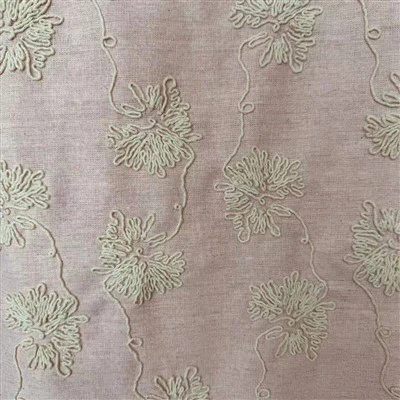
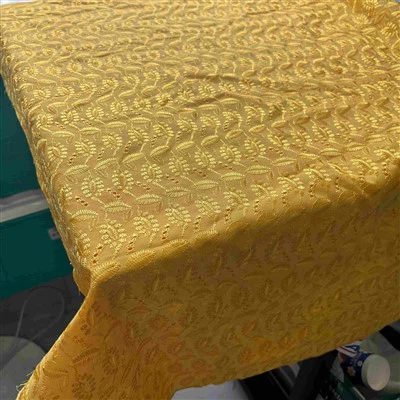
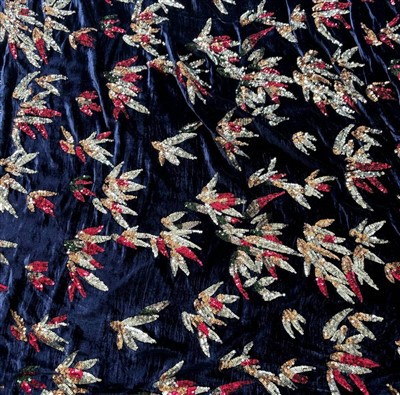
In high-end textile manufacturing, combining cotton eyelet lace with corded embroidery is a classic technique to create rich, tactile 3D textures. However, during mass production, we sometimes run into a frustrating defect: the corded line strays off its intended CAD path.
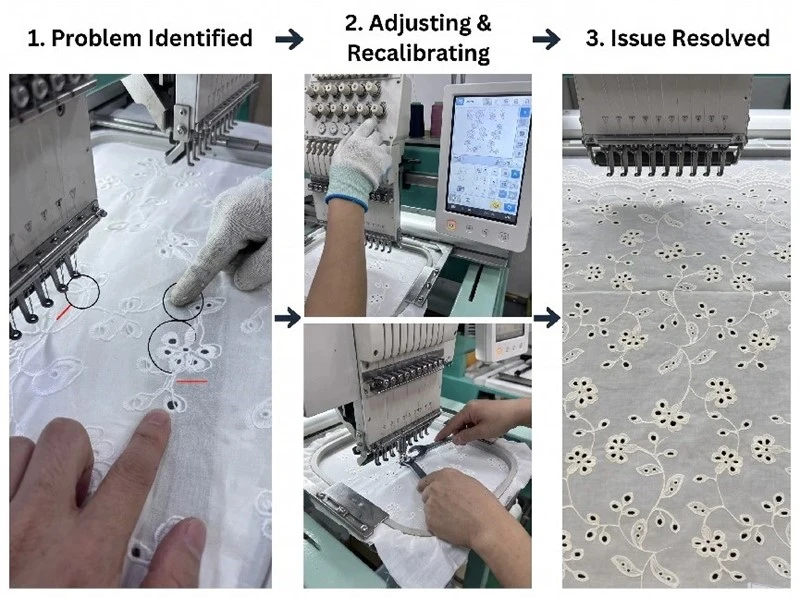
The image above illustrates a typical factory flaw. Due to a momentary misstep on the machine frame, the corded thread shifted, failing to follow the precise CAD coordinates.
While a sub-millimeter shift might seem minor at first glance, it can cause visible pattern distortion across garment panels or render entire fabric rolls unusable. So, what causes this misalignment, and how can embroidery manufacturers systematically eliminate it? That's we are going to talk about.
Why Does Cord Shift Occur?
In multi-head embroidery machines like Promaker which we use now, pattern offset usually stems from three main operational gaps:
Manual Hooping Imbalance
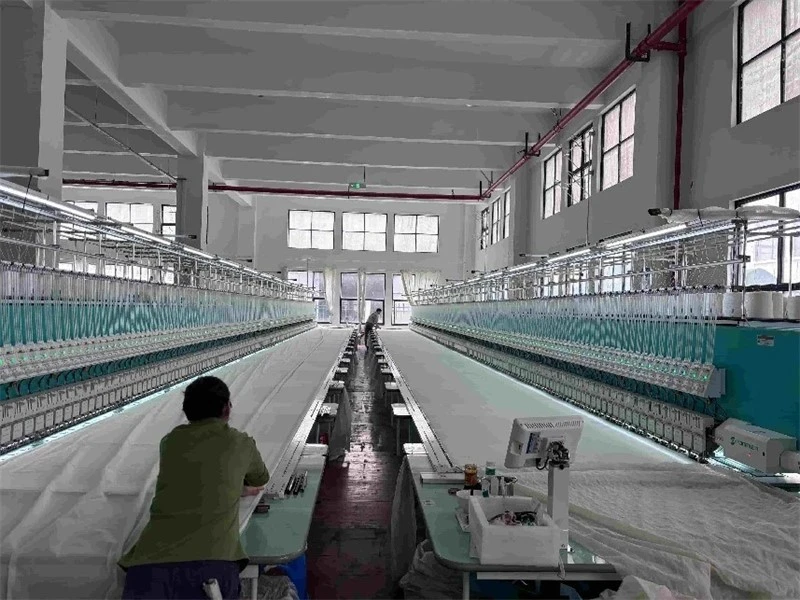
When operators secure the cotton base fabric onto the machine frame, uneven hand tension or slight diagonal tilting creates micro-stretches. As stitch density builds up, the fabric warps, causing subsequent cording steps to misalign with the initial CAD design.
Cording Attachment Offset
Corded embroidery relies on specialized cording devices mounted on the machine heads. If the device's origin point or X/Y-axis zero-point offset is not perfectly calibrated with the main needle head, the machine executes the CAD path with a constant physical offset.
Fabric Physics & Tension Neglect
Woven cotton fabrics naturally possess slight diagonal stretch. Without pre-shrinking or proper stabilizer backing, high-speed stitching pulls the fabric fibers, pulling physical coordinates away from digital CAD points.
How to Prevent Embroidery Misalignment
1. Standardized Hooping & Alignment Markers
CAD Registration Marks: Digitizers should add subtle geometric alignment stitches at pattern corners. Operators must align these marks with frame grid lines before locking down the fabric.
Pneumatic Framing Clamping: Replace manual pulling with pneumatic clamping frames to maintain uniform tension across the entire fabric width.
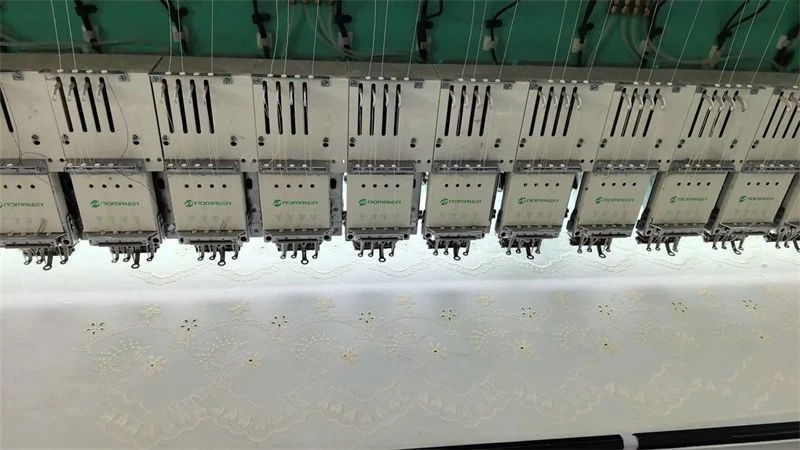
Thanks to their excellent X/Y-axis drive precision and stable pneumatic performance, our Promaker machines effectively minimize alignment errors in cording embroidery caused by the accumulation of mechanical inaccuracies.
First-Piece Optical Calibration
Our embroidery machines feature a large-screen touchscreen control system that supports pattern previewing, automatic zero-point calibration, thread-break detection, and multi-pattern management, ensuring high precision in pattern compensation and axial offset control.
3. Stabilizer Backing
Proper Backing Paper: Use water-soluble backing film or tear-away stabilizers under cotton bases to maintain fabric flatness under high-speed needle impact.